Roofing Guide
How to Tarp a Roof — Step by Step
Your roof is damaged and rain is coming. Here is the complete method for putting a tarp on a roof safely and so it actually stays on — written by Naples roofers who do this after every storm.
Open 24/7 · 3555 Kraft Rd Unit 130, Naples, FL 34105 · Free written estimates
The Short Answer — Tarping a Roof, With the Numbers
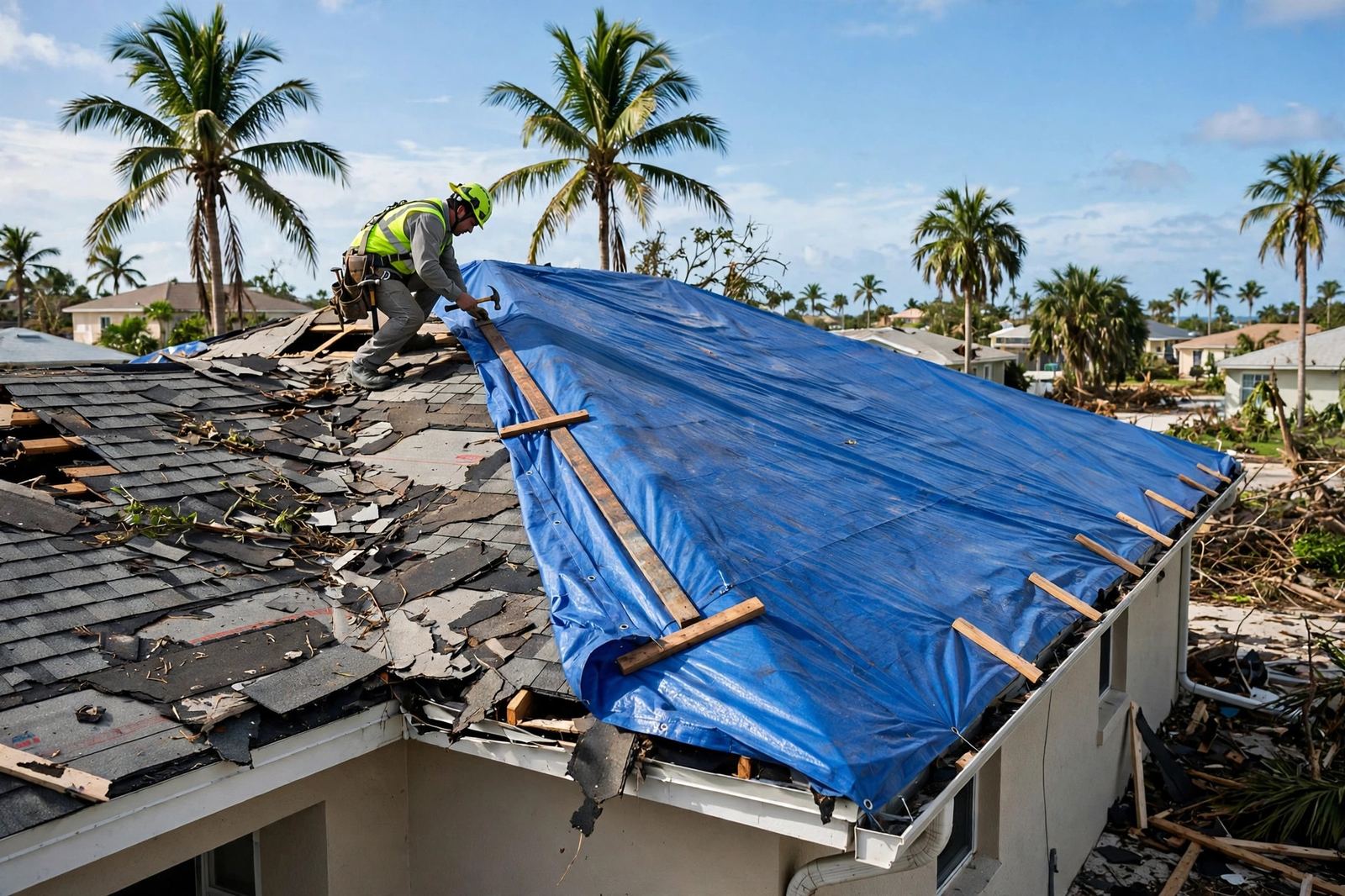
To tarp a roof: cover the damaged area with a heavy-duty tarp that extends at least 4 feet past the damage on every side and, wherever possible, over the ridge so water cannot run underneath. Anchor it with 2×4 wood battens screwed along every edge (cap nails or screws every 12–18 inches) — never just rope or bungee cords, which fail in the next gust.
- Tarp size: measure the damaged area and add 8 feet to both dimensions. A typical storm-damaged slope needs a 20×30 ft or 30×40 ft tarp; large roof tarps up to 40×60 ft exist for whole-slope coverage.
- Tarp thickness: at least 6 mil heavy-duty woven polyethylene, UV-treated. The best tarp for a roof is a silver or blue heavy-duty tarp — not a thin camping tarp.
- How long will a tarp last on a roof? A properly battened tarp lasts 30–90 days in Florida sun and wind; a loosely tied one can fail in the first storm. It is temporary protection, not a repair.
- Safety line: never tarp during lightning, high wind or on a wet, steep roof. That is exactly when our emergency roof tarping crew earns its keep — call (239) 829-7779, 24/7.
Table of Contents
What You Need to Tarp a Roof
A heavy-duty tarp sized as above, 2×4 lumber for battens (enough to frame every edge), 3-inch screws or cap nails, a drill, a ladder stabiliser, work gloves, and a second person. Putting a tarp on a roof alone is how injuries happen — the tarp catches wind like a sail.
How to Put a Tarp on a Roof — The Steps
- Assess from the ground first. Photograph the damage for your insurer before anything is covered.
- Clear loose debris from the damaged area so nothing punctures the tarp from underneath.
- Unroll the tarp on the ground and roll one edge around a 2×4 batten two or three turns, then screw through the roll so the edge can never pull free.
- Carry it up and position it so it covers the damage with the 4-foot margin on all sides and drapes over the ridge if the damage is anywhere near the peak. Water runs downhill — a tarp that stops below the ridge lets water under its top edge.
- Batten every edge. Screw battens along both sides and the bottom edge, fasteners every 12–18 inches into the roof deck or rafters where possible. Leave no loose, flapping edge — flapping is what tears tarps apart and pulls fasteners out.
- Check from inside. Look in the attic during the next rain to confirm the leak has stopped.
Mistakes That Make Tarps Fail
- Tying a tarp with rope or bungees instead of battens — the number one failure we see in Naples
- A tarp too small: damage within 4 feet of any edge will leak
- Nailing through the tarp in the middle of a slope, creating new holes
- Covering roof with tarp but leaving the top edge below the ridge line
- Leaving a tarped roof for a whole season — UV eats tarps; plan the permanent roof repair
How Long Will a Tarp Last on a Roof?
In Naples conditions, expect 30–90 days from a well-anchored, UV-treated tarp. Florida sun is the enemy: after about three months the material turns brittle. If your permanent repair will take longer, a synthetic underlayment dry-in — which our crew installs as part of our tarp roof service — protects far longer than any tarp.
When to Call a Professional Instead
Call instead of climbing if the roof is steep, wet, two storeys, structurally damaged, or if power lines are anywhere near the work. Our emergency crew installs a full roofing tarp system — battened, ridge-wrapped and photographed for your insurer — at any hour. Read more about the service on our Emergency Roof Tarping page, and if the damage underneath needs fixing, our Roof Repair page explains the permanent side.
Frequently Asked Questions
What is the best tarp for a roof?
A heavy-duty woven polyethylene tarp, at least 6 mil thick, UV-treated, in blue or silver. Lightweight camping tarps tear and degrade in Florida sun within weeks.
Can I tarp a roof in the rain?
It is dangerous and the tarp will not seal well on a wet, slippery roof. If rain is active, protect the interior with buckets and plastic sheeting and tarp the moment it is safe — or call our 24/7 crew.
Will insurance cover roof tarping?
Most Florida homeowners policies require you to mitigate further damage, and tarping is the standard mitigation step. Keep the receipt and photos; we document both for you when we install it.
Need a Tarp on Your Roof Tonight?
Call Gulf Roofers Naples any time — we answer 24/7 across Naples, FL.